No products in the cart.

PRP/PRF Under Eyes London

PRF Treatment for Under-Eye Rejuvenation – Dr Hans Clinics

- From £220 per session

Duration

45-60 minutes

Sessions

1/3

Solid black image with no visible content

Price

£220 - £650

Downtime

Minimal

The under-eye region is one of the first areas to show fatigue and collagen loss.

At Dr Hans Clinics, we use autologous platelet concentrates; PRP or PRF to improve skin quality and hydration beneath the eyes, without altering facial structure or expression.

Treatments are offered only after a doctor-led consultation to ensure safety and suitability.

Key Benefits

100% autologous and naturally derived
Targets dark circles and tired-looking eyes
Boosts collagen and skin regeneration
Enhances skin firmness and resilience
No synthetic fillers or migration risk
Minimal downtime and recovery
Subtle, natural-looking rejuvenation
Long-lasting results with maintenance

Target Areas

Under Eyes (Tear Troughs)
Dark Circles
Under-Eye Hollows
Fine Lines Around Eyes
Periorbital Skin Quality

Why Patients Choose This Approach

Doctor-performed injections using sterile techniques using a fine gauge needle or a cannula.
Individualised concentration and placement - no standardised “tear trough filler” dosing.
Documented improvement in dermal quality via Quantificare imaging.
Honest guidance: Results vary and are subtle, not filler-like or instant.

How It Works

A small amount of blood is drawn and centrifuged to isolate platelet-rich plasma (PRP) or fibrin (PRF).
Platelets release growth factors that signal fibroblasts to remodel collagen and support micro-circulation.
The plasma is gently injected into the periorbital skin or used post-microneedling, depending on indication.

Evidence Summary

Clinical studies show improvement in fine lines and crepiness with PRP around the eyes; pigmentation outcomes are variable.
PRF may provide a more sustained release of growth factors compared to PRP, though data remain limited.
Mechanistically supported by platelet-derived factors (PDGF, TGF-β, VEGF) that enhance dermal matrix turnover.

Safety & Downtime

Mild swelling or redness for 24 - 48 h; makeup may be worn the next day.
Bruising risk is minimal with cannula technique.
Not suitable for : Pregnancy, breastfeeding, recent isotretinoin, bleeding disorders, or skin infection.

Indications We May Consider

Crepiness or fine lines in the lower eyelid area.
Mild pigmentation or dullness related to dermal thinning.
Early hollowing where filler may be unsafe or unnecessary.

When we may not recommend it:

Advanced fat-pad prolapse or deep hollows - better addressed surgically or with structural fillers.
Expectation of instant brightening - pigment changes are variable and gradual.

What to Expect

1 - 2 weeks: Skin feels more hydrated.
4 - 8 weeks: Improvement in texture and fine lines.
3 - 6 months: Review and consider maintenance if beneficial.

Dr Hans Clinics : Protocol and workflow

Consultation and assessment

Medical screening and consent

Blood collection using PRF-specific tubes

T-Lab PRF gel tubes without anticoagulant

Swing-out centrifuge separation

Plasma and PRF fraction collection

Albumin-rich plasma prepared for gel formation

Controlled heating in thermoblock / dry bath incubator

Albumin gel formation

Controlled cooling and gel stabilisation

Mixing albumin gel with liquid PRF

Consistency adjusted depending on treatment goal

Thicker gel for more soft tissue support

Softer gel for delicate skin-quality work

Skin cleansing and marking

Needle or cannula selection

Targeted PRF EZ Gel injection

Symmetry and tissue response check

Aftercare advice

Gradual results over several weeks

Review and treatment plan

Alternatives We May Discuss

Polynucleotides (PDRN/PN) - for cellular regeneration.
Biofiller or hyaluronic/ amino acid skin boosters - if structure or hydration needs more support.
Tixel or microneedling - for tightening or pigmentation irregularities.

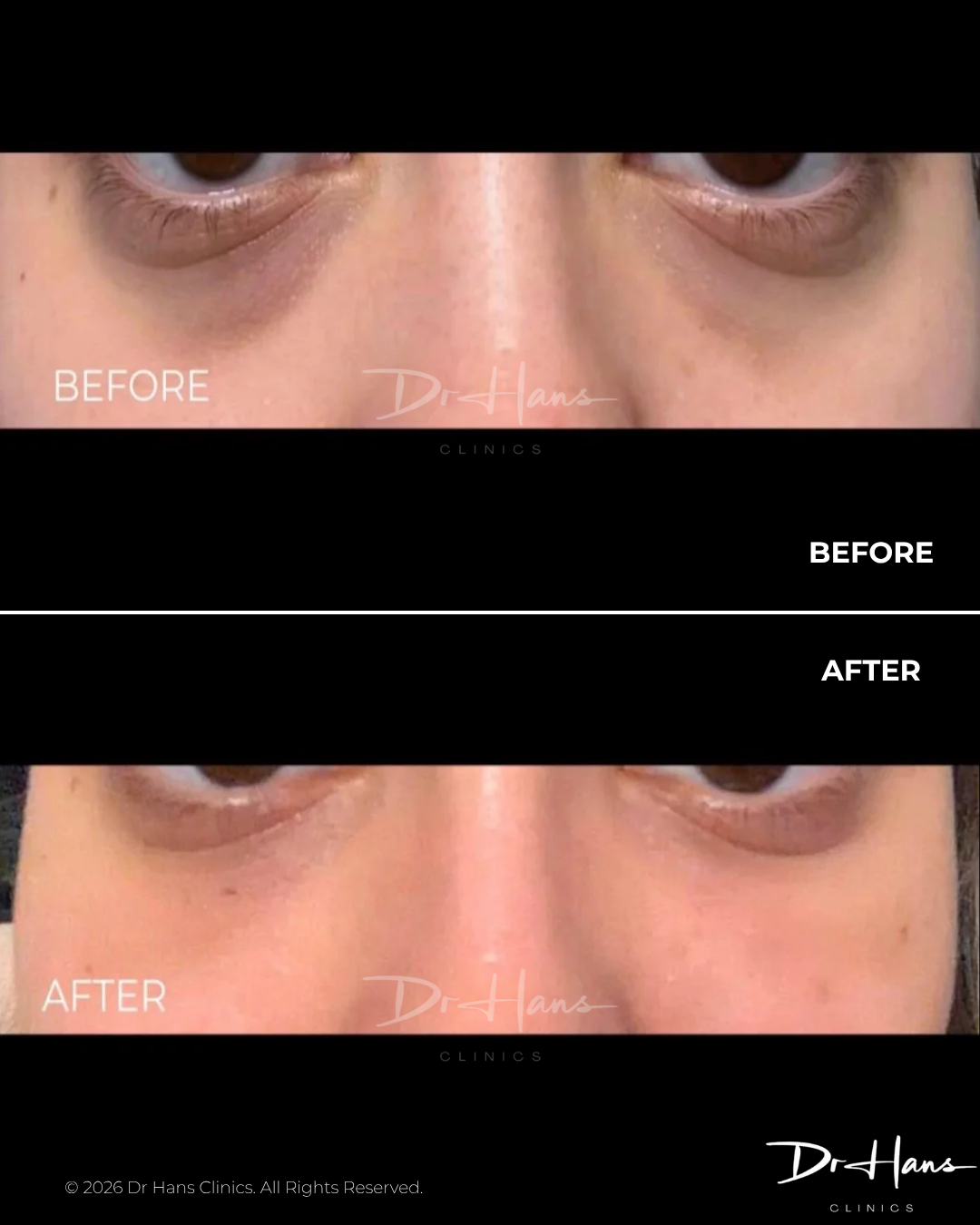
Clinical Before & After Results with PRP/PRF Under-Eye Rejuvenation

Pricing

  • Single session £220
  • Course of 3 sessions £640

A Note on Transparency

PRF EZ Gel Biofiller is frequently marketed in ways that overstate what it does. Claims of long-lasting structural volume, permanent regeneration, or results comparable to dermal fillers aren’t supported by the current evidence. The published literature on plasma gel treatments is still relatively limited, and most studies are small and early in their design.

What we can say with reasonable confidence: PRF Biofiller improves subtle hollowing and early volume loss in suitable patients, delivers some regenerative stimulus through the PRF component, and does so without synthetic material. Results are real but modest, and maintenance is part of the treatment.

We think patients deserve to know that before they book. The consultation is where we work out whether this treatment makes sense for you, and if something else would work better, we’ll recommend that instead.


Evidence-based treatments in skin, hair, body and regenerative medicine. Safety, honesty, and precision at the heart of every procedure.

Our Treatment Specialists

Dr. Hansel Misquitta

Founder | Dr. Hans Clinics

MBBS | MSc Plastic & Reconstructive Surgery (UCL) | PGDip Bioethics (UNESCO Chair)

FAQ's

What is PRP under-eyes?

Your own platelets concentrated and injected under the eyes to stimulate collagen and improve skin quality.

Either cannula or micro-droplet injections, chosen based on safety and anatomy.

Usually 3, spaced 4–6 weeks apart.

Best for crepiness/texture; pigmentation-related dark circles need other treatments.

Yes, when performed by a trained doctor under sterile conditions. Risks include swelling, bruising, rarely infection.

Important Information

● This information is educational and not a substitute for medical advice.

● Treatment is only offered after a consultation with a qualified clinician.

● We do not promote prescription-only medicines directly to the public.

PRP vs PRF – What’s the Difference?

Both PRP (Platelet-Rich Plasma) and PRF (Platelet-Rich Fibrin) are autologous (from your own blood) and aim to deliver platelets, growth factors, and regenerative cells into the skin or scalp.

PRP (Platelet-Rich Plasma)

  • Prepared with anticoagulant and higher centrifuge speeds.
  • Produces a clear plasma with concentrated platelets.
  • Growth factors are released rapidly after injection.
  • Evidence: widely studied in skin and hair; reviews show modest but reproducible improvements in texture, fine lines, and hair density in suitable patients.

PRF (Platelet-Rich Fibrin)

  • No anticoagulant; spun at lower speeds.
  • Forms a fibrin matrix that traps platelets, leukocytes, and circulating stem-cell-like cells.
  • Growth factors are released more slowly and over a longer period.
  • Evidence: early studies suggest PRF may provide a more sustained regenerative effect compared with PRP, but long-term head-to-head trials are still limited.

Which is better?

  • Current evidence suggests PRP remains the most established with the largest body of clinical research, especially for skin and hair.
  • PRF is emerging and biologically plausible for sustained release, but published human studies are fewer and results vary.
  • Choice depends on your treatment goals, tissue quality, and clinician recommendation – both are offered at the same price in our clinic.

Brighten, don’t just fill with our PRF/PRP under eyes london

Book your under-eye consultation to see if autologous PRP or PRF is right for you.

error: Content is protected !!