No products in the cart.

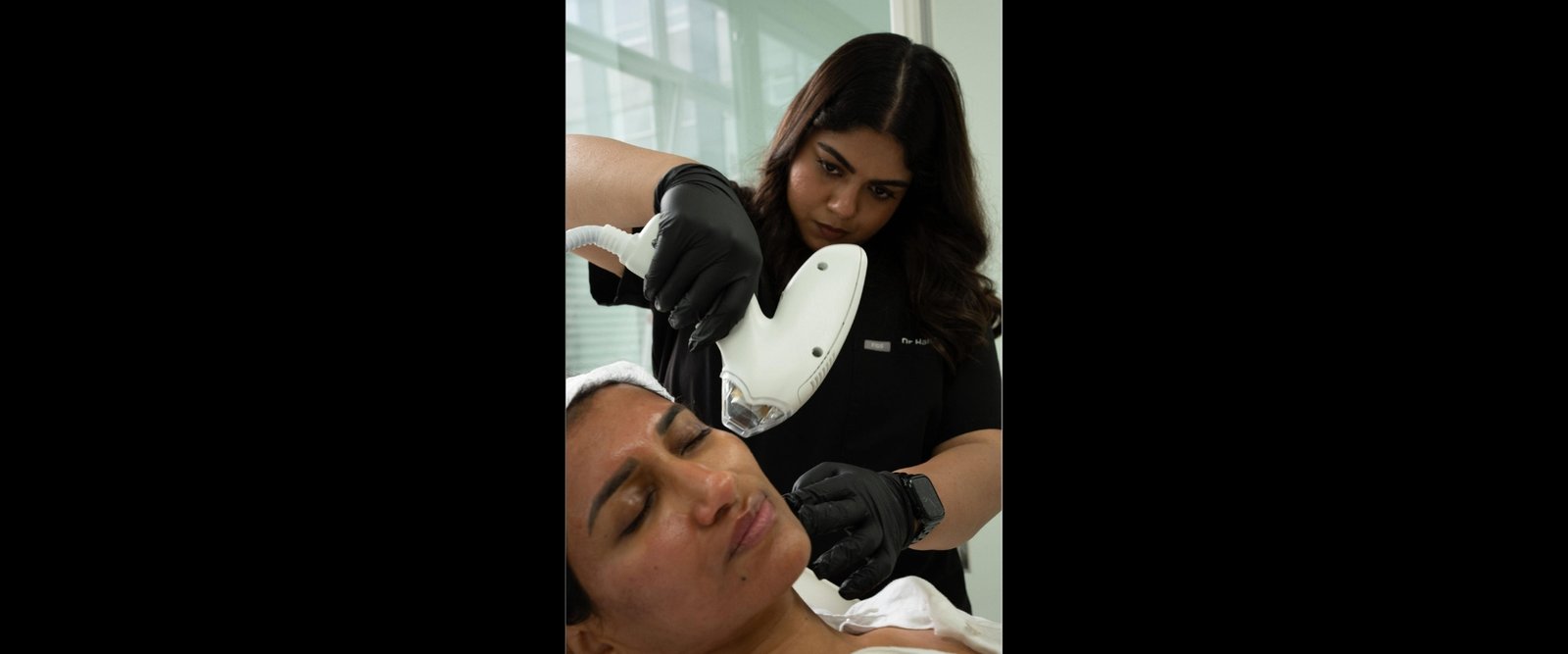
Tixel for Dry Eye: Can a Skin Device Really Help Meibomian Gland Dysfunction?
Written by Dr. Hansel Misquitta. MBBS, MSc Burns Plastic & Reconstructive Surgery, UCL, PGDip Bioethics.
Aesthetics Practitioner with background in Plastic Surgery | International Trainer & KOL | Founder, Dr Hans Clinics London.
Last reviewed: May 2026
Clinic: Dr Hans Clinics, 33 Cavendish Square, London W1G 0PW.
Last reviewed: May 2026
Clinic: Dr Hans Clinics, 33 Cavendish Square, London W1G 0PW.
Dry eye sounds minor until you have it.
Then suddenly your eyes feel like someone replaced your tears with cheap sandpaper.
Burning. Grittiness. Redness. Watering. Blurry vision. Contact lens intolerance. Makeup irritation. That awful “my eyes are tired but I also look like I have been crying in a car park” situation.
Most people think dry eye means they do not produce enough tears.
Sometimes that is true.
But very often, especially in adults, the problem is not just tear quantity. It is tear quality.
More specifically, it is the oil layer.
That brings us to meibomian gland dysfunction, or MGD, which is one of the major causes of evaporative dry eye. The meibomian glands sit in the eyelids and produce the oily layer of the tear film. That oil stops tears evaporating too quickly.
When those glands are blocked, inflamed or sluggish, the tears evaporate faster.
So the eye becomes dry, irritated and unstable.
And no, simply drowning the eyes in random drops is not always enough.
That is where treatments like IPL, LipiFlow and now Tixel have entered the conversation.
What is Tixel for dry eye?
Tixel is better known in aesthetics for skin rejuvenation, eyelid tightening and texture improvement.
But a medical version of Tixel has also been studied for dry eye linked to meibomian gland dysfunction.
Tixel uses controlled thermo-mechanical action. In dry eye treatment, the energy is delivered to the eyelid skin overlying the meibomian glands. The idea is to use controlled heat to improve gland function, meibum flow and tear film stability.
A 2025 randomised controlled trial found that Tixel treatment in adults with meibomian gland dysfunction showed comparable results to standard treatment approaches and supported its safety and effectiveness in this group.
So yes, the idea is not as strange as it first sounds.
A device used near the eyelids may help dry eye because many dry eye cases are actually eyelid-gland problems.
The eyelid is not just a curtain for the eyeball.
It is part of the tear system.
A very small, very dramatic curtain.
What is meibomian gland dysfunction?
The meibomian glands produce oil.
That oil forms the top layer of the tear film.
The tear film has three broad layers:
A mucin layer that helps tears spread
An aqueous layer that provides watery moisture
A lipid layer that reduces evaporation
When the lipid layer is poor, tears evaporate too quickly.
That is evaporative dry eye.
MGD can be linked with:
Blepharitis
Rosacea
Hormonal changes
Ageing
Screen use
Contact lens wear
Poor lid hygiene
Inflammation
Some medications
Menopause
Previous eye surgery
Environmental dryness
The problem is not always that the body cannot make tears.
Sometimes the tears are there, but they behave badly.
A bit like having staff, but no management.
Why drops alone may not be enough
Eye drops can help symptoms.
But if the underlying issue is blocked or dysfunctional meibomian glands, drops may only act like temporary wetting.
Useful, yes.
Curative, no.
That is why many dry eye protocols now include treatments that target the eyelids and glands rather than just the tear surface.
These may include:
Warm compresses
Lid hygiene
Artificial tears
Anti-inflammatory drops where prescribed
Omega-3 discussion where appropriate
IPL
LipiFlow
Meibomian gland expression
Tixel in suitable cases
The aim is not just to lubricate the eye.
The aim is to improve the tear film environment.
That is a different conversation.
How Tixel may help dry eye
Tixel may help dry eye by delivering controlled heat to the eyelid region.
This may support:
Meibomian gland function
Improved oil flow
Better tear film stability
Reduced evaporative dryness
Improved symptoms such as grittiness, burning and irritation
A 2022 pilot study reported that Tixel treatment improved signs and symptoms in patients with dry eye disease due to meibomian gland dysfunction, with benefits lasting at least one month. The authors also stated that further randomised double-blind studies were needed.
That is exactly the kind of evidence statement I like.
Promising.
Not magical.
Useful.
Not finished science.
The 2025 randomised controlled trial adds stronger support by comparing Tixel with standard treatment in adults with MGD, reporting safety and effectiveness outcomes that support its role in this area.
So the evidence is moving in the right direction.
But this should still be approached as a proper eye-related treatment, not a beauty add-on squeezed between a facial and a latte.
Eyes are not accessories.
Tixel vs IPL for dry eye
IPL is one of the more established device-based treatments for evaporative dry eye and MGD. It uses intense pulsed light around the periocular area to reduce inflammation, improve vascular changes and support meibomian gland function.
Tixel is different.
It does not use light. It uses controlled heat transfer.
That may make it attractive for selected patients, especially where light-based treatment is not ideal or where eyelid-based thermal treatment is being considered.
But I would not say Tixel “replaces” IPL for everyone.
That would be too neat. Medicine is rarely neat. It prefers being inconvenient.
Some patients may suit IPL.
Some may suit Tixel.
Some may need lid hygiene and prescription treatment first.
Some may need ophthalmology review.
Some may have dry eye that is not primarily MGD.
The correct question is not “which device is trendier?”
It is:
What type of dry eye do you have?
Because treating aqueous-deficient dry eye like MGD is like trying to fix a plumbing problem by painting the wall.
Tixel vs LipiFlow for dry eye
LipiFlow is a well-known thermal pulsation treatment for meibomian gland dysfunction. It applies heat and pressure to the eyelids to help clear gland obstruction and improve oil flow.
Tixel works differently. It delivers controlled thermo-mechanical heat to the eyelid skin rather than using an internal lid device with pulsation.
ClinicalTrials.gov has listed studies comparing Tixel with LipiFlow in meibomian gland dysfunction, reflecting the fact that Tixel is being investigated against established MGD technologies rather than just marketed in isolation.
That matters.
It shows the question is not “can we make this sound good?”
The question is “how does it perform compared with recognised dry eye treatments?”
That is the right question.
Very rare. Refreshing, frankly.
Who may benefit from Tixel for dry eye?
Tixel may be considered in patients with dry eye linked to meibomian gland dysfunction.
Possible symptoms include:
Gritty eyes
Burning
Stinging
Redness
Watery eyes
Fluctuating blurry vision
Contact lens intolerance
Heavy or tired eyelids
Dryness that worsens with screens
Dryness that worsens in air conditioning
Symptoms that improve briefly with drops but keep coming back
But symptoms alone are not enough.
You need proper assessment.
Dry eye can have different causes. MGD is common, but not the only one. Some patients have aqueous tear deficiency, autoimmune-related dry eye, medication-related dryness, allergy, lid margin disease, rosacea, Demodex, contact lens issues or post-surgical dryness.
If the diagnosis is wrong, the treatment plan will be wrong.
And the eyes are not the place to freestyle.
Who should not rush into Tixel for dry eye?
Do not rush into device treatment if you have:
Unexplained eye pain
Sudden vision changes
Severe redness
Light sensitivity
Eye trauma
Suspected infection
Active herpes around the eye
Recent eye surgery without clearance
Autoimmune dry eye that has not been assessed
Severe dry eye requiring ophthalmology care
Any red flag symptoms
Those patients need proper medical or ophthalmology assessment first.
Tixel may be useful for selected MGD patients, but it is not a substitute for diagnosing eye disease properly.
If someone has severe inflammatory eye disease and the plan is “let’s just do a device treatment”, please escort that plan directly into the bin.
What happens during Tixel dry eye treatment?
A typical Tixel dry eye protocol involves treatment to the upper and lower eyelid region, depending on the protocol and device version used.
The treatment is usually done as a course rather than a one-off miracle.
Patients may feel warmth or a brief hot sensation. The eyelid skin may look red afterwards. Some patients may have mild swelling, sensitivity or dryness around the treated skin. Eye-specific aftercare and ocular lubrication may be recommended depending on the clinical setup.
The exact protocol depends on the device, clinician, eye findings and whether the patient is being treated in an ophthalmology-led dry eye pathway or an aesthetic clinic with appropriate referral links.
This should not be treated like a casual skin add-on.
It needs proper consent, screening and referral criteria.
Again: eyes. Not elbows.
Why Tixel for dry eye fits a more modern view of aesthetics
This is where I find Tixel interesting.
A lot of aesthetic treatments only chase appearance.
But around the eyes, function and appearance overlap.
Patients with dry eye often also have:
Crepey eyelid skin
Lid inflammation
Poor skin quality
Makeup intolerance
Redness
Irritation
Tired-looking eyes
Tixel sits at an interesting junction between eyelid skin quality and meibomian gland-related dry eye research.
That does not mean every dry eye patient should have it.
It means the eye area should be treated intelligently, not split into “medical” and “aesthetic” boxes like the body cares about our admin categories.
The eyelids do not know whether you booked through an aesthetics page or an eye clinic.
They just respond to biology.
My honest clinical view
I like Tixel for the eye area because it is one of the few technologies that makes genuine sense around delicate eyelid skin.
For aesthetics, it may help crepiness, texture and eyelid skin quality.
For dry eye, the emerging evidence around MGD is promising, especially because the treatment targets the eyelid region where the meibomian glands live.
But I would be strict with assessment.
I would want to know:
Is this actually MGD?
Is there blepharitis?
Is there rosacea?
Is there Demodex?
Is the patient using contact lenses?
Are there autoimmune symptoms?
Are there red flags?
Have they tried basic lid hygiene and lubricants?
Do they need ophthalmology input?
Is Tixel appropriate, or are we just excited because the device exists?
That last question is important.
A device existing is not a diagnosis.
A trend is not an indication.
And dry eye patients deserve more than “let’s try this and see”.
Final thoughts
Tixel for dry eye is not nonsense.
The evidence for meibomian gland dysfunction is growing, including pilot work and randomised controlled trial data. It may help selected patients with evaporative dry eye linked to poor meibomian gland function.
But it is not for every dry eye patient.
If your dryness is mainly aqueous-deficient, autoimmune-related, medication-related or caused by another eye condition, the plan may be different.
That is why proper diagnosis matters.
Tixel may be a useful option when the problem is eyelid-gland dysfunction and the patient is suitable.
Not because it is trendy.
Not because it sounds clever.
Not because every device suddenly needs a medical personality.
Because the eyelids and meibomian glands are part of the tear system, and controlled thermal treatment may help selected cases.
That is the honest position.
No fairy dust.
No miracle claims.
Just eyes, oil glands and biology doing their usual complicated little performance.
Evidence and expectations
Tixel has emerging evidence for dry eye related to meibomian gland dysfunction. A 2022 pilot study reported improvement in signs and symptoms, while a 2025 randomised controlled trial supported safety and effectiveness in adults with MGD. More long-term and comparative evidence is still useful, and treatment should be based on proper assessment. Tixel is not a treatment for all forms of dry eye.
FAQ'S
Can Tixel help dry eye?
Tixel may help selected patients with evaporative dry eye caused by meibomian gland dysfunction. It is not suitable for every type of dry eye.
What is meibomian gland dysfunction?
Meibomian gland dysfunction is when the oil glands in the eyelids do not produce or release oil properly. This makes tears evaporate too quickly and can cause dryness, burning, grittiness and watery eyes.
Is Tixel better than IPL for dry eye?
Not necessarily. IPL is more established for many dry eye protocols. Tixel is another option being studied for MGD. The best choice depends on the type of dry eye, skin, eyelid findings and medical history.
Is Tixel better than LipiFlow?
Not automatically. LipiFlow is a thermal pulsation treatment. Tixel uses thermo-mechanical heat through the eyelid skin. Studies comparing these approaches are ongoing or published in selected settings, but patient selection matters.
Does Tixel dry eye treatment hurt?
Most patients describe warmth or brief heat rather than severe pain. Sensation depends on protocol, settings and individual tolerance.
How many sessions are needed?
Many protocols use a course of treatments, often spaced weeks apart. The exact number depends on the patient and clinical assessment.
Can Tixel be used if I have blepharitis?
Possibly, but active lid inflammation needs proper assessment and management. Sometimes lid hygiene, medication or ophthalmology input is needed first.
Can Tixel help watery eyes?
Sometimes watery eyes are actually a dry eye symptom because the tear film is unstable. If the cause is MGD, Tixel may help selected patients. If watering is due to blocked tear drainage or another issue, treatment would be different.
Is Tixel dry eye treatment safe?
Published studies support safety in selected MGD patients, but it still needs appropriate screening, consent and technique. Eye symptoms with red flags require medical assessment first.
Who should avoid Tixel for dry eye?
Patients with sudden vision changes, severe eye pain, active infection, recent eye surgery without clearance, severe inflammatory eye disease or unexplained symptoms should have medical or ophthalmology review first.
About the author
Dr Hans Misquitta is an aesthetic practitioner with a background in plastic surgery and advanced skin-focused aesthetic medicine. She is the founder of Dr Hans Clinics in London, where her work focuses on evidence-led, natural-looking treatment planning for skin quality, ageing, regenerative aesthetics, hair restoration and non-surgical rejuvenation.
Her approach is simple: diagnose first, treat second, and do not sell a device just because it exists.
Clinic: Dr Hans Clinics, 33 Cavendish Square, London W1G 0PW
Clinical focus: Skin quality, Tixel, regenerative aesthetics, hair restoration, non-surgical rejuvenation
Last reviewed: May 2026
If your eyes feel gritty, dry, watery or irritated, do not just keep buying drops and hoping for divine intervention.
Book an assessment at Dr Hans Clinics in London. We can discuss whether your symptoms sound like meibomian gland dysfunction, whether Tixel may be appropriate, or whether you need ophthalmology input first.
No guesswork. No device worship. Your eyes deserve better than “let’s see what happens”.
dry eye, dry eye treatment, tixel dry eye, meibomian gland dysfunction, mgd treatment, dry eye clinic, dry eye specialist, tixel treatment, tixel therapy, evaporative dry eye, eye dryness treatment, blocked meibomian glands, eyelid treatment, tear film dysfunction, dry eye symptoms, eye irritation treatment, burning eyes, gritty eyes, watery eyes, blurry vision, contact lens discomfort, blepharitis treatment, eyelid inflammation, eyelid rejuvenation, thermal eye treatment, non surgical dry eye treatment, london dry eye clinic, dry eye consultation, tixel london, meibomian gland treatment, eye clinic london, dry eye specialist london, chronic dry eye, ocular surface disease, eye health, tear film stability, eyelid gland treatment, dry eye relief, advanced dry eye treatment, dr hans clinics, tixel for mgd, eye care london, meibomian gland therapy, dry eye diagnosis, dry eye management

Dr Hansel Misquitta


Related posts

Written by Dr. Hansel Misquitta. MBBS, MSc Burns Plastic & Reconstructive Surgery, UCL, PGDip Bioethics. Aesthetics Practitioner with background in Plastic Surgery | International Trainer... Continue reading
Get Tixel for effective stretch mark treatment in London. Non-laser, thermo-mechanical action remodels skin with minimal downtime. Safe for all skin types. Continue reading

Tired of crepey neck skin? Learn how Tixel's non-laser thermal technology tightens loose skin on the neck and décolletage with fast results and minimal downtime. Continue reading
Add comment